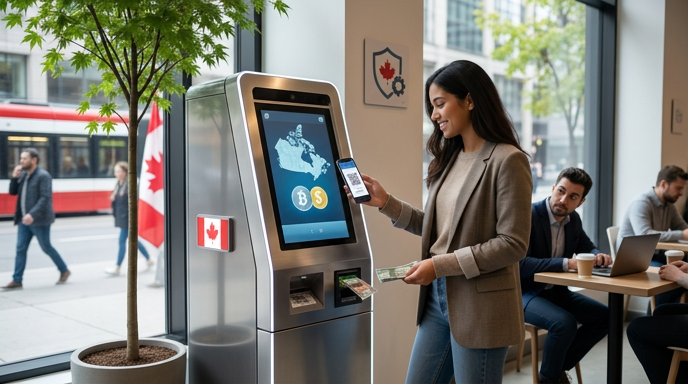
Starting a Bitcoin ATM business Canada 2026 requires understanding regulatory obligations, realistic fee models, hardware choices, cash handling, and CRA reporting. This guide explains step-by-step how to launch and operate a compliant Bitcoin ATM operation in Canada, including FINTRAC registration, AML/KYC expectations, typical costs and revenue scenarios, insurance and security, and ongoing accounting. If your intent is to evaluate profitability or prepare for regulatory compliance before you invest, this article gives practical, Canadian-focused next steps.
Table of Contents
- Why a Bitcoin ATM business in Canada can make sense in 2026
- Quick checklist - Legal and operational must-haves
- Step-by-step: How to launch (practical roadmap)
- Typical cost and revenue model (example)
- Machine types and feature comparison
- Regulatory specifics for Canada
- AML/KYC practical approach
- Security and insurance considerations
- Operational best practices
- Common pitfalls to avoid
- When to scale or exit
- Related resources and peer practices
- FAQ
- Do I need to register with FINTRAC to operate a Bitcoin ATM in Canada?
- How much can I realistically charge in fees?
- Are Bitcoin ATM revenues taxable?
- Which machine should I choose for a first deployment?
- How do I reduce theft and fraud risk?
- Conclusion — Actionable takeaways
Why a Bitcoin ATM business in Canada can make sense in 2026
Bitcoin ATMs remain a tangible on-ramp for new users and a convenient service for cash-heavy communities. For entrepreneurs, revenue comes from spread and transaction fees; for local small businesses, hosting an ATM can draw foot traffic and a rental income stream. However, profits depend on volume, fee strategy, liquidity costs, and meeting regulatory and security requirements — especially FINTRAC registration and CRA reporting.
Quick checklist - Legal and operational must-haves
- Register as a Money Services Business (MSB) with FINTRAC if applicable.
- Develop an AML/ATF compliance program and appoint a compliance officer.
- Implement KYC and recordkeeping processes for transactions above thresholds.
- Secure insurance for cash, hardware, and crypto custody risk.
- Create a bookkeeping process for revenue, fees, and CRA reporting — see guidance in the CRA Bitcoin tax reporting guide.
- Plan for physical security, cash replenishment, and host site agreements.
Step-by-step: How to launch (practical roadmap)
- Market research and site selection
- Identify high-footfall locations with a cash-using demographic: convenience stores, malls, transit hubs, college areas.
- Estimate daily transaction volume conservatively (start with 2-10 tx/day for a low-traffic site; 20-100+ for strong sites).
- Choose machine type and supplier
- Select 1-way (sell-only) or 2-way (buy and sell) machines. 2-way increases complexity and cash handling costs but adds revenue opportunities.
- Vendors: General Bytes, BitAccess, and Lamassu are common choices; compare connectivity, remote management, and AML/KYC features.
- Register and comply with FINTRAC
- Most operators will be considered MSBs under FINTRAC guidance and must register, maintain an AML program, and report suspicious transactions
- Implement ID verification for transactions that meet thresholds or per your risk assessment.
- Banking and fiat liquidity
- Open a business bank account and a fiat settlement account with an exchange or liquidity provider to buy/sell Bitcoin for the machine.
- Understand your provider's fees, settlement times, and KYC requirements.
- Security and cash logistics
- Arrange armored courier or regular cash pick-ups, and plan cash float levels per location.
- Harden physical security (bolting, CCTV, panic alarm) and enable remote monitoring of machine health and transaction logs.
- Insurance, contracts and merchant relationship
- Get insurance covering cash-in-transit, hardware theft, and cyber risks; review options in the Bitcoin insurance guide.
- Draft clear host location agreements with revenue share, maintenance, and liability clauses.
- Tax and accounting setup
- Set up accounting to separately track machine fees, spreads, cash flows, and cost of Bitcoin purchases. Consult the CRA Bitcoin tax reporting guide for recordkeeping expectations.
- Testing, launch and ongoing compliance
- Run pilot tests, enable error monitoring, and train site staff on basic troubleshooting and emptying procedures.
- Review AML program at least annually and maintain SAR/CTR filing readiness.
Typical cost and revenue model (example)
Below is an illustrative monthly P&L for a single, moderate-traffic 2-way ATM. Numbers are estimates — replace with your quotes.
| Line item | Monthly |
|---|---|
| Machine lease / depreciation | $500 |
| Site rent / revenue share | $300 |
| Cash replenishment / armored courier | $400 |
| Connectivity and remote monitoring | $50 |
| Insurance and security | $150 |
| Fiat/crypto liquidity fees and spreads | $400 |
| Total costs | $1,800 |
| Revenue: average 20 tx/day at $25 avg tx (fee 8%) | $1,200 |
| Net (example) | -$600 (loss) — shows the importance of volume and fee management |
This example demonstrates that profitability often requires higher transaction volume, optimized liquidity arrangements, or lower operating costs. In practice, operators seek sites with 50+ transactions per month or aggregate multiple machines to spread fixed costs.
Machine types and feature comparison
| Feature | 1-way (sell-only) | 2-way (buy & sell) |
|---|---|---|
| Cash handling complexity | Lower | Higher |
| Revenue opportunities | Limited to fees on buy | Fees on both directions |
| Security risk | Lower (less cash stored) | Higher (more cash float) |
| Regulatory complexity | Moderate | Higher (more reporting, potential chargeback exposure) |
Regulatory specifics for Canada
Key Canadian regulatory points for ATM operators:
- FINTRAC: Register as an MSB where your activities meet virtual currency dealing thresholds. Expected controls include a written AML program, ongoing monitoring, and recordkeeping.
- Banking relationships: Some banks are cautious about customers transacting with virtual currency. Transparent KYC, clear business purpose, and compliance documentation make banking relationships easier.
- Provincial rules: Municipal bylaws and landlord agreements may restrict installation; check zoning and lease terms.
- CRA: Fees earned are business income and must be reported. Keep detailed records for each transaction and settlement. For general guidance see the CRA Bitcoin tax reporting guide.
AML/KYC practical approach
Design an AML program proportionate to your business size. Practical measures:
- Use vendor-supplied KYC modules or integrate ID verification providers for higher-value transactions.
- Set transaction limits for anonymous use and enforce verification above set thresholds.
- Keep transaction logs and customer identification records per FINTRAC recordkeeping timelines.
- Train staff on recognizing suspicious activity and filing Suspicious Transaction Reports (STRs).
Security and insurance considerations
Security is both physical and cyber. Key actions:
- Minimize on-site cash by scheduling frequent collections and limiting float.
- Install tamper-evident locks, CCTV, and alarms tied to a rapid-response service.
- Insure for cash, theft, hardware damage, and crypto custody exposures. See options in the Bitcoin insurance guide.
Operational best practices
- Monitor uptime and remote diagnostics to reduce downtime.
- Automate reconciliation between cash collected and on-chain settlements daily.
- Use clear on-screen instructions and multilingual support to reduce customer errors.
- Keep a small emergency float and limits to protect against rapid price swings during settlement.
Common pitfalls to avoid
- Underestimating cash collection costs or security expenses.
- Failing to implement a compliant AML program before going live.
- Neglecting clear contracts with host locations and armored couriers.
- Poor bookkeeping that complicates CRA reporting and triggers audits.
When to scale or exit
Scale when machines consistently exceed break-even transaction volumes and you have repeatable processes for site selection, security, and reconciliation. Consider exiting if downtime, vandalism, or compliance costs outstrip revenue despite remediation attempts.
Related resources and peer practices
Before signing vendor contracts, review operator forums and local operator experiences for realistic uptime, theft risks, and effective revenue shares. For learning how to safely handle peer-to-peer cash sales and on-the-ground risk management, see our guide on how to safely sell Bitcoin peer-to-peer in Canada.
FAQ
Do I need to register with FINTRAC to operate a Bitcoin ATM in Canada?
Most operators dealing in virtual currency will need to register as an MSB with FINTRAC, implement an AML program, and maintain recordkeeping and reporting. Requirements depend on your exact business model and volumes. Consult FINTRAC guidance and a compliance advisor.
How much can I realistically charge in fees?
Fees vary by market and competition. Typical spreads plus transaction fees range from 5% to 15% per transaction. Higher fees reduce volume; balance competitiveness with site economics. Consider lower fees for high-volume sites.
Are Bitcoin ATM revenues taxable?
Yes. Fees and spreads you receive are business income and must be reported to the CRA. The tax treatment of the Bitcoin you buy and sell via the ATM follows CRA guidance on cryptocurrency — keep detailed records and consult a tax professional. See our CRA Bitcoin tax reporting guide for recordkeeping tips.
Which machine should I choose for a first deployment?
For first deployments, many operators choose a 1-way machine to limit cash handling complexity while testing demand. Select a vendor with remote management, robust reporting, and AML/KYC modules to simplify compliance.
How do I reduce theft and fraud risk?
Use low on-site cash floats, frequent armored pickups, remote alerts for tampering, CCTV, and secure mounting. Vet host sites carefully and maintain strong contractual protections with site owners.
Conclusion — Actionable takeaways
- Start with a conservative pilot site and a 1-way machine to validate demand.
- Register with FINTRAC early, build a proportionate AML program, and document procedures.
- Model costs conservatively: armored courier, insurance, and settlement fees drive economics.
- Keep transparent records for CRA reporting and consider outsourcing bookkeeping to a crypto-aware accountant.
- Prioritize security and insurance to protect cash and hardware investments.