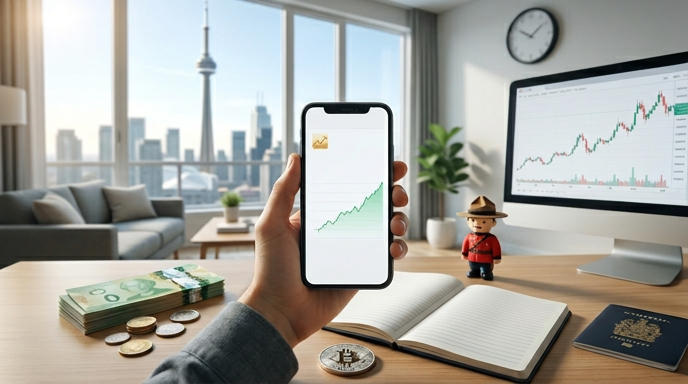
Dollar-Cost Averaging Bitcoin Canada 2026: How to Set Up Automated Recurring BTC Purchases, Fees, and CRA Recordkeeping
Dollar-cost averaging Bitcoin Canada 2026 is a practical strategy for Canadians who want to build BTC exposure without timing the market. This guide explains how to set up automated recurring BTC purchases, compares payment methods and fees common in Canada (Interac e-transfer, bank wires, cards, pre-authorized debits), covers delivery and self-custody workflows, and outlines simple CRA-friendly recordkeeping so your recurring buys are audit-ready.
Table of Contents
- Table of Contents
- Why Dollar-Cost Averaging Works for Bitcoin
- Choosing the Right Platform and Payment Method
- Step-by-Step Setup: From Bank to Self-Custody
- Fees and Speed Comparison
- CRA Recordkeeping and Reporting for Recurring Buys
- Risks, Security, and Best Practices
- Sample Recurring Buy Workflows for Canadians
- Workflow A: Simplicity - Exchange-only DCA
- Workflow B: Automated buys + monthly self-custody withdrawals
- Workflow C: DCA into Lightning via custodial channel funding
- FAQ
- 1) Is DCA better than lump-sum investing for Bitcoin?
- 2) How do I report recurring buys to the CRA?
- 3) Can I automate withdrawals to my hardware wallet?
- 4) Which payment method is cheapest for recurring buys?
- 5) What if my bank blocks recurring crypto purchases?
- 6) Should I DCA into ETFs instead of self-custodied Bitcoin?
- Conclusion and Actionable Takeaways
Table of Contents
- Why Dollar-Cost Averaging Works for Bitcoin
- Choosing the Right Platform and Payment Method
- Step-by-Step Setup: From Bank to Self-Custody
- Fees and Speed Comparison
- CRA Recordkeeping and Reporting for Recurring Buys
- Risks, Security, and Best Practices
- Sample Recurring Buy Workflows for Canadians
- FAQ
- Conclusion and Actionable Takeaways
Why Dollar-Cost Averaging Works for Bitcoin
Dollar-cost averaging (DCA) means buying a fixed CAD amount of Bitcoin at regular intervals (daily, weekly, biweekly, or monthly). For volatile assets like BTC, DCA reduces the risk of poor timing and enforces discipline. It also simplifies recordkeeping if you standardize amount, frequency, and destination (exchange vs. self-custody). DCA is especially useful for Canadians who want to convert savings into Bitcoin without watching price charts.
Choosing the Right Platform and Payment Method
Start by selecting platforms that support recurring buys for Canadian residents and offer reliable payment rails. Key considerations:
- Supported payment methods in Canada: Interac e-transfer, bank account (ACH-like), bank wire, debit/credit card, pre-authorized debit (PAD).
- Recurring buy features and limits: Does the platform allow weekly/biweekly/monthly schedules and auto-execution?
- Withdrawal automation: Can you schedule automatic withdrawals to a personal wallet or do you need manual transfers?
- KYC and limits: Be prepared for identity verification for recurring purchases and higher limits.
- Fees and spreads: Platforms differ in fees for cards, Interac, and instant settlement services—compare total cost per purchase.
If you need a primer on where to buy and the trade-offs of exchanges vs P2P and ATMs in Canada, see this overview: Where to Buy Bitcoin in Canada (2025): Exchanges, P2P, ATMs, Fees, KYC, and Moving to Self‑Custody.
Step-by-Step Setup: From Bank to Self-Custody
Below are practical, numbered steps to set up recurring buys while prioritizing withdrawal to your own wallet.
- Decide frequency and amount. Typical choices: weekly CAD 50–200, or monthly CAD 200–1,000. Pick what fits your budget and liquidity needs.
- Choose a platform that supports recurring buys for Canadians. Confirm payment rails, fees, and withdrawal options.
- Complete KYC and connect a payment method. For Interac e-transfer, pre-fund your exchange account or use instant e-transfer if offered. For bank account PADs, expect ACH-style debits and slower settlement.
- Configure recurring buy schedule. Set a specific day and frequency to keep bookkeeping consistent.
- Automate withdrawals to a hardware wallet. If possible, schedule weekly or monthly withdrawals from the exchange to your hardware wallet address. If the platform does not support scheduled withdrawals, plan an automated script or a calendar reminder to move funds.
- Use a consistent withdrawal address per destination wallet. For self-custody, create a receiving address that you use for recurring withdrawals; use a new address per withdrawal if you prioritize on-chain privacy.
- Keep a running CSV of trades and withdrawals. Export trade history, withdrawal txids, and bank deposit records. This simplifies CRA reporting later.
- Test with a small amount first. Confirm that recurring purchases execute and that withdrawals land in your wallet before scaling up.
- Periodically verify balances and transaction history. Monthly reconciliation prevents surprises and catches failed withdrawals early.
Fees and Speed Comparison
Choose payment rails based on cost vs speed. Below are typical Canadian trade-offs; exact fees vary by provider.
- Interac e-transfer - Cost: low to moderate (small flat fee or free), Speed: near-instant to same day, Limits: typically CAD 3,000–10,000/day depending on bank and exchange.
- Bank wire / EFT - Cost: low per transfer, Speed: 1–3 business days, Limits: high, good for lump sums.
- Pre-authorized debit (PAD) - Cost: low, Speed: scheduled debits settle in 1–3 days, Good for fully automated recurring buys from bank account.
- Debit/Credit card - Cost: high fees and potential cash-advance treatment, Speed: instant, Limits: lower.
- Instant settlement services - Cost: moderate, Speed: instant, Useful when you need an immediate buy and the fee is worth it.
When calculating cost-per-purchase, include both exchange taker/maker fees and spread (difference between market price and executed price). For small recurring buys, fixed fees can be a disproportionate drag; prefer percentage fees or platforms optimized for micro-DCA.
CRA Recordkeeping and Reporting for Recurring Buys
Buying Bitcoin repeatedly creates many cost basis entries. The CRA expects accurate tracking when you dispose (sell, trade, spend). Practical guidance:
- Keep an export of every purchase with timestamp, CAD amount, BTC amount, and price per BTC.
- Record withdrawal txids and receiving addresses to prove custody transfers from exchange to your wallet.
- Keep bank records showing the CAD outflows that funded the purchases (Interac e-transfer history, bank statements).
- When disposing, apply a clear cost-basis method (CRA accepts specific identification if you can support it; otherwise first-in-first-out is common). Consult a tax professional for disputes.
- Maintain exports year-by-year and back them up securely with your other financial records.
For a full walk-through on CRA expectations for crypto reporting, refer to: CRA Bitcoin Tax Reporting 2026: A Practical Guide for Canadians.
Risks, Security, and Best Practices
Automating buys reduces effort but introduces operational risks. Mitigate them with these practices:
- Use 2FA and unique passwords for exchange accounts. Prefer hardware security keys where supported.
- Route recurring buys to an exchange account only as a short-term staging point; schedule regular withdrawals to self-custody.
- Use hardware wallets and consider a multisig setup for larger balances (see multisig guide if needed).
- Monitor for failed purchases and returned payments — automated systems can stall without visible alerts.
- Beware of bank policies: some Canadian banks may scrutinize recurring crypto purchases. Maintain documented purpose and proof of transactions if needed.
- Have an emergency withdrawal plan in case an exchange freezes funds — this can include keeping a small balance in a second, reputable platform.
If you want to combine DCA with resilient custody for emergencies, this guide explains building an emergency fund that mixes cold storage, hot wallets, and Lightning: Building a Bitcoin Emergency Fund in Canada.
Sample Recurring Buy Workflows for Canadians
Three practical workflows depending on your priorities.
Workflow A: Simplicity - Exchange-only DCA
- Use an exchange that supports weekly recurring buys via Interac e-transfer.
- Set weekly CAD 100 purchases.
- Keep holdings on the exchange for convenience. Monitor periodically.
Pros: lowest friction. Cons: custody risk and potential counterparty exposure.
Workflow B: Automated buys + monthly self-custody withdrawals
- Configure weekly or biweekly recurring buys.
- Automate a monthly withdrawal of accumulated BTC to your hardware wallet address.
- Verify each withdrawal with txid and reconcile against purchase CSV.
Pros: balances custody and automation. Cons: requires withdrawal discipline and on-chain fees for monthly transfers.
Workflow C: DCA into Lightning via custodial channel funding
- Set recurring buys and keep BTC on an exchange or service that can open a Lightning channel for you.
- Periodically move funds into your Lightning node or custodial channel provider to enable fast spending.
Pros: instant spendability for purchases and everyday use. Cons: more complex and may involve routing or custodial risk.
FAQ
1) Is DCA better than lump-sum investing for Bitcoin?
DCA reduces timing risk and enforces consistent saving. Lump-sum can outperform if timed well, but DCA is generally better for risk-averse savers and those building exposure over time.
2) How do I report recurring buys to the CRA?
Record each purchase with date, CAD amount, BTC amount, and USD/CAD price where applicable. Export exchange trade history and bank statements. When you dispose, calculate capital gain/loss using your chosen cost-basis method and keep supporting documents.
3) Can I automate withdrawals to my hardware wallet?
Some platforms allow scheduled withdrawals; others do not. If automation is not available, set a calendar reminder to withdraw weekly or monthly. For large balances consider multisig and offline signing workflows.
4) Which payment method is cheapest for recurring buys?
Bank wire and PADs generally have the lowest recurring cost, but are slower. Interac e-transfer balances low fees and speed, making it a popular choice for Canadians. Avoid credit cards for recurring buys due to high fees.
5) What if my bank blocks recurring crypto purchases?
Banks may flag recurring transfers to crypto platforms. Keep documentation showing the purpose (investment in Bitcoin), use reputable exchanges, and be ready to provide identity and transaction details. Consider splitting purchases across two banks if needed.
6) Should I DCA into ETFs instead of self-custodied Bitcoin?
DCA into spot Bitcoin ETFs inside registered accounts (TFSA/RRSP) is a valid strategy for tax-advantaged exposure. If your goal is self-custody, DCA to BTC and withdraw to your hardware wallet. For ETF vs self-custody trade-offs see the 'Where to Buy' guide linked above.
Conclusion and Actionable Takeaways
- Decide frequency and amount that fit your budget and stress tolerance.
- Choose Canadian-friendly payment rails that balance fees and speed — Interac e-transfer is often the sweet spot.
- Prefer workflows that move BTC off exchanges into self-custody on a regular cadence.
- Keep clean exports: purchase CSVs, withdrawal txids, and bank records to satisfy CRA reporting.
- Test with a small recurring amount, verify withdrawals, then scale up.
Automated recurring purchases are one of the easiest ways for Canadians to build Bitcoin exposure while minimizing behavioural mistakes. If you need deeper help selecting an exchange, custody model, or tax treatment for high-volume DCA strategies, review the linked resources and consider consulting a Canadian tax or crypto custody professional.